CASE STUDY 02 / ROBOTICS
Sentinel.
One platform. Room for what comes next.
THE PROJECT, IN BRIEF
One platform. Room for what comes next.
A cable-riding surveillance robot concept with a detachable three-axis gimbal, protected wiring, and a magnetic charging prototype.
- CLIENT / CONTEXT
- In collaboration with Kaleidoscope Innovation
- PROJECT OUTPUTS
- System requirements and mechanical architecture · Modular gimbal and payload interface · Printed subsystem prototypes · Motion-control and charging demonstrations
- THE RESULT
- An integrated prototype demonstrating modular payload handling, controlled gimbal motion, and a magnetic charging concept.
01 / The challenge
Think about the whole system from the start.
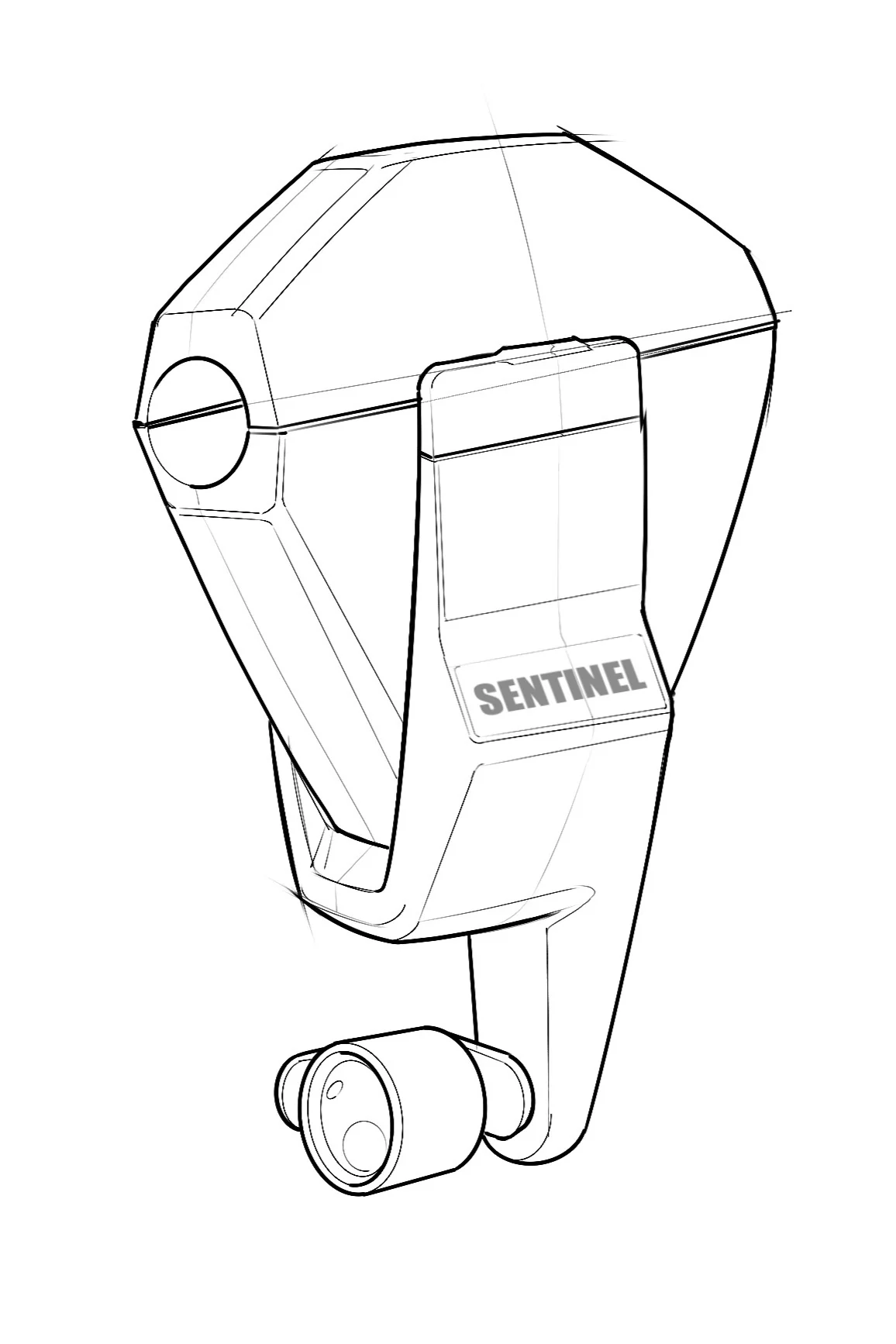
Developed in collaboration with Kaleidoscope Innovation, Sentinel explored a surveillance robot that could travel along an overhead cable and carry a stabilized imaging payload.
The challenge extended beyond the external form. Motion, payload access, wiring, and charging all had to work within the same mechanical architecture. The project needed a credible route from system concept to demonstrable hardware.
- Cable-riding platform concept
- Pan, tilt, and roll for an imaging payload
- Architecture that allows the payload to change
02 / Requirements and architecture
Define the boundaries before detailing the parts.
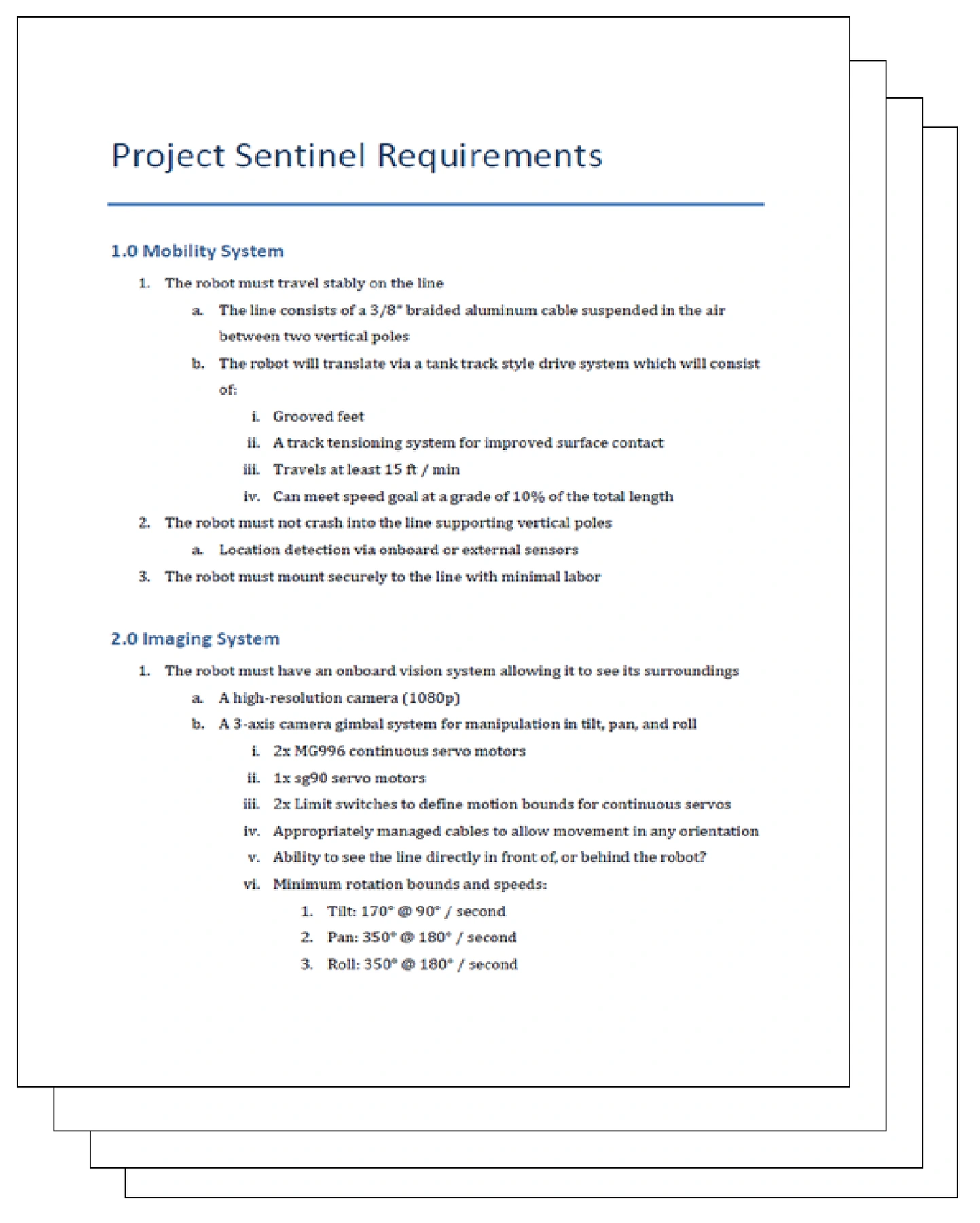
The requirements work established motion limits, cable protection, detachable interfaces, and docking expectations. Defining those boundaries early gave the individual subsystems a common set of targets.
Serviceability influenced the architecture alongside motion. The gimbal needed to separate from the platform so future payloads could be explored without starting the base design again.
- Controlled rotation and protection against over-travel
- Routing space for wires and connectors
- Defined mechanical boundaries between platform and payload
03 / Subsystem prototyping
Learn from the small builds first.
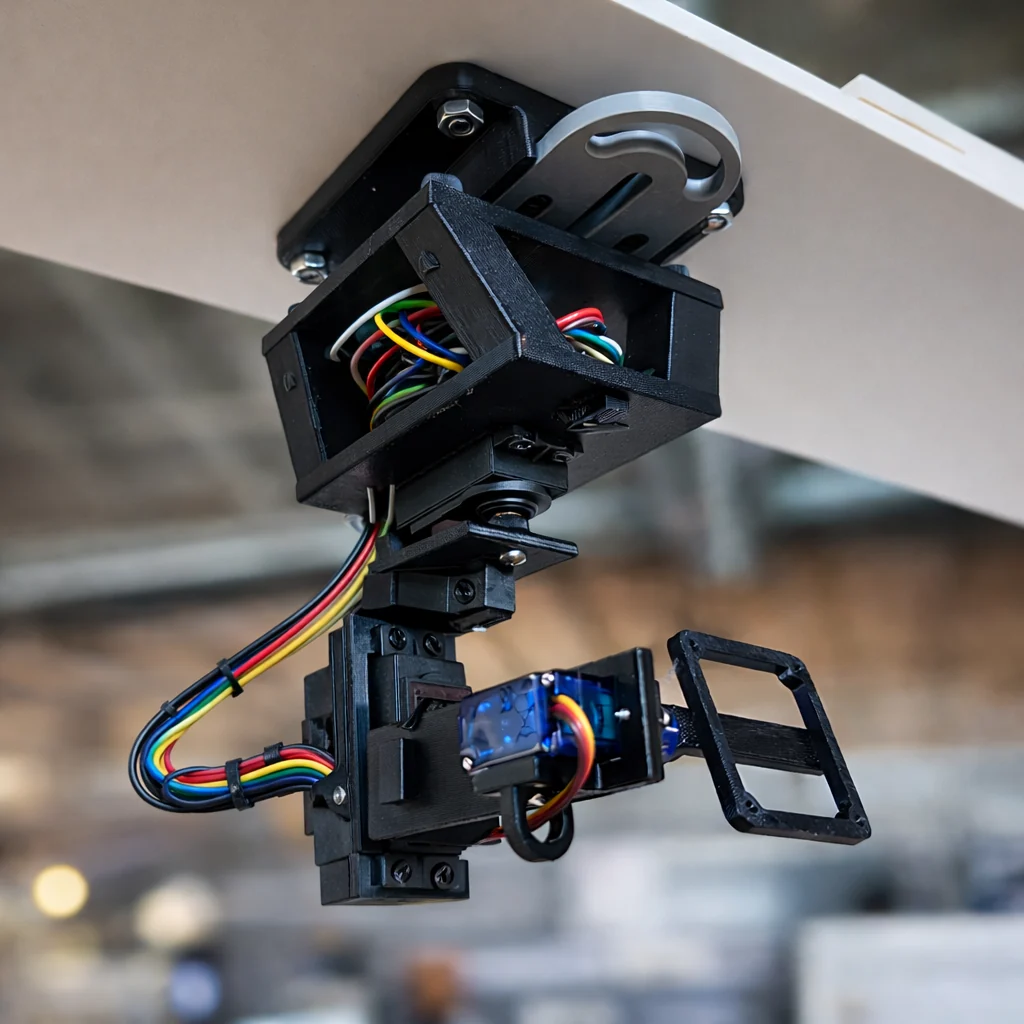
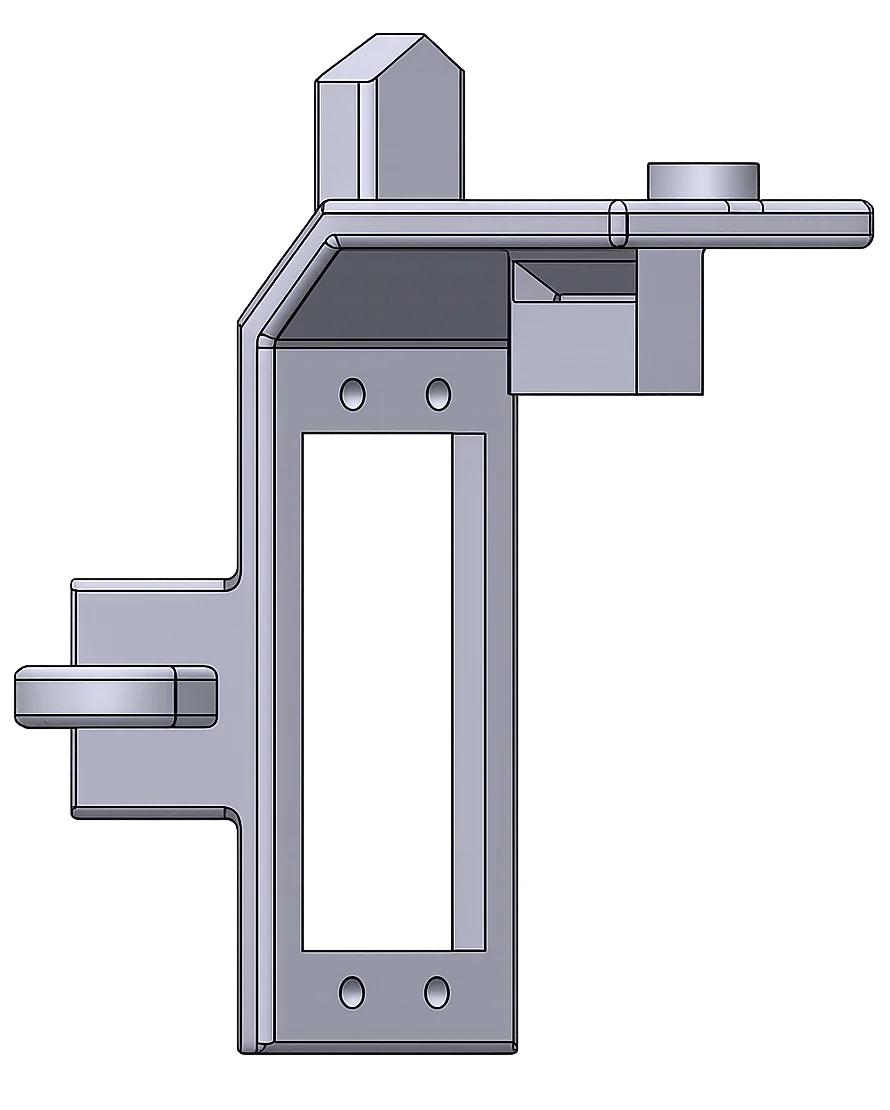
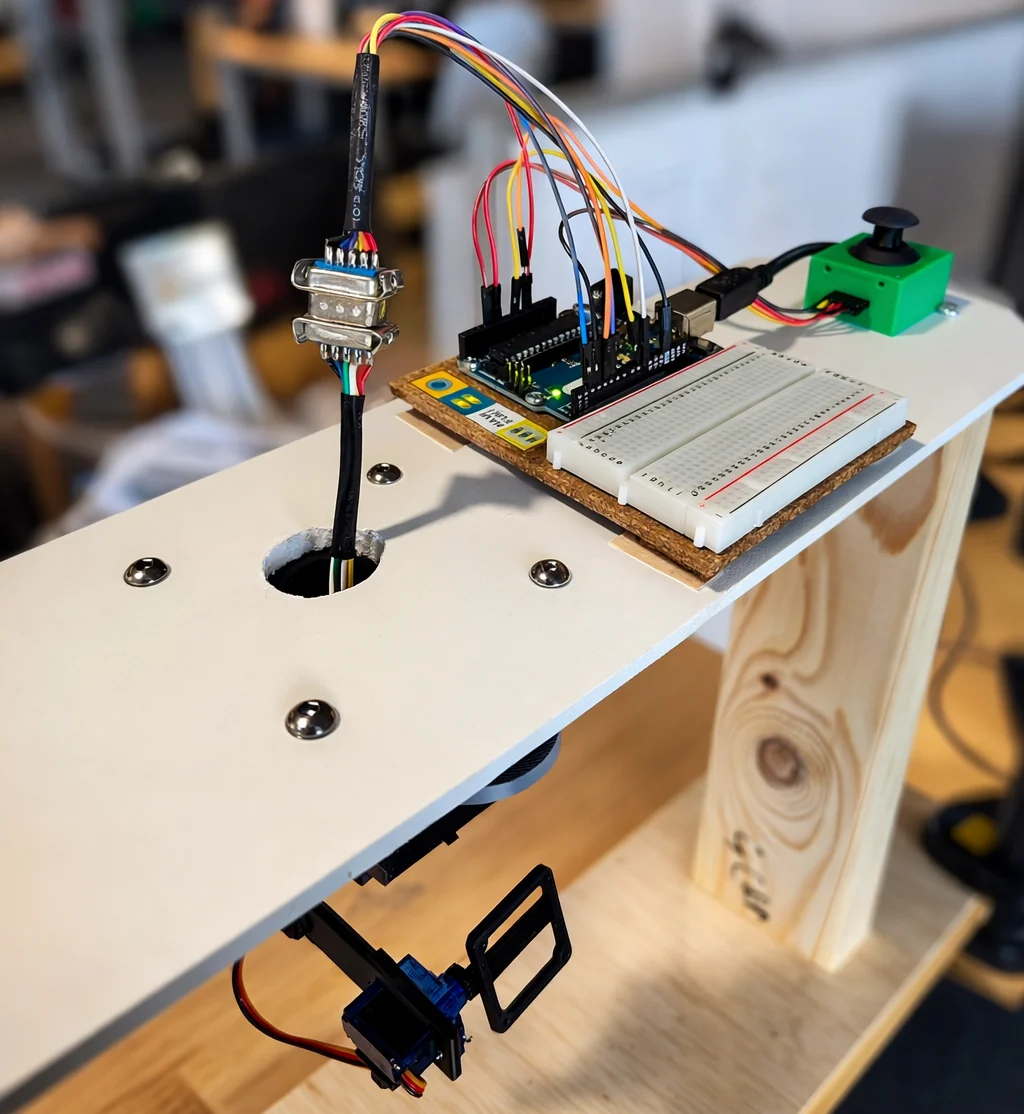
Early development broke the system into manageable experiments. Printed arm geometry made clearance checks possible, while joystick hardware and bench wiring allowed the control behavior to be evaluated before final packaging.
Developing the physical and control systems together exposed their interfaces while they were still easy to change. Fit, movement, and wiring informed the assembly as it matured.
- Printed arm geometry for clearance and range checks
- Joystick input for direct motion testing
- Control logic evaluated alongside physical hardware
04 / Mechanical integration
Make the moving interfaces work together.
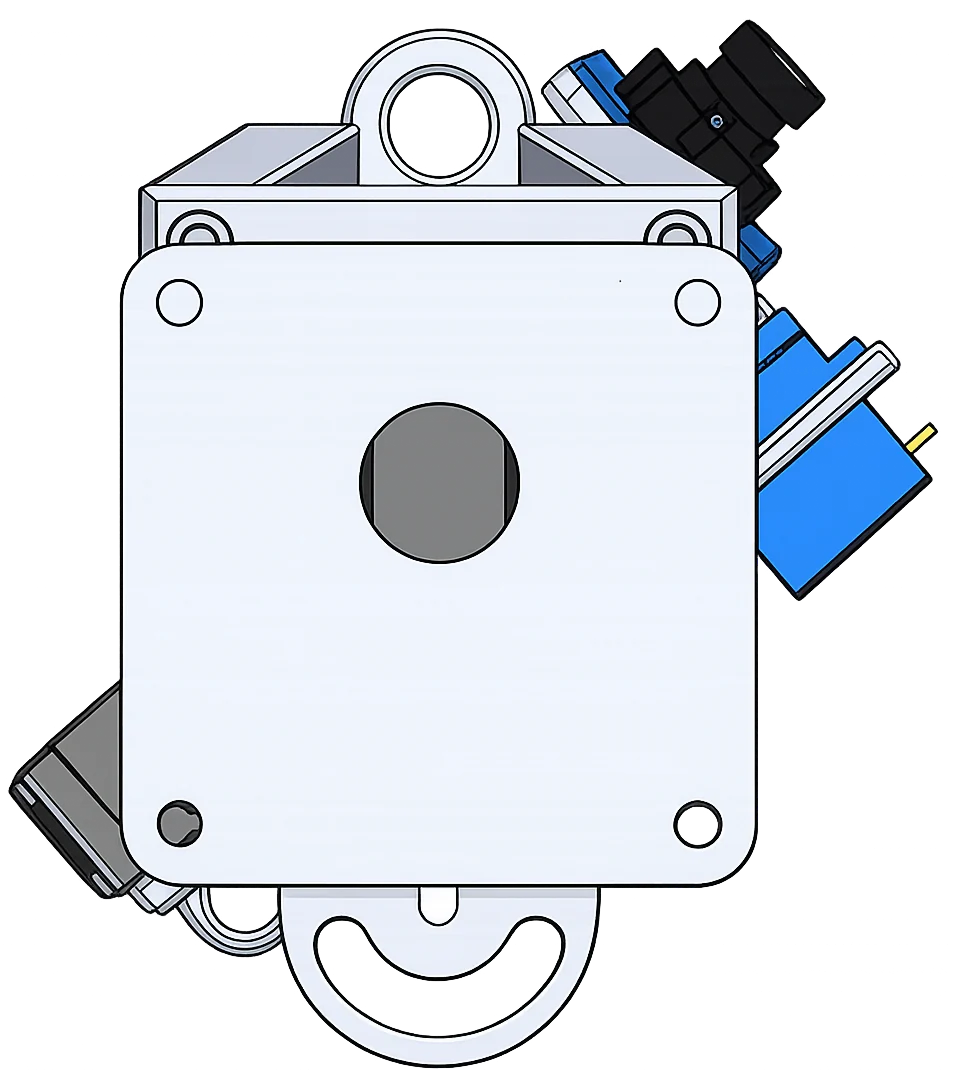
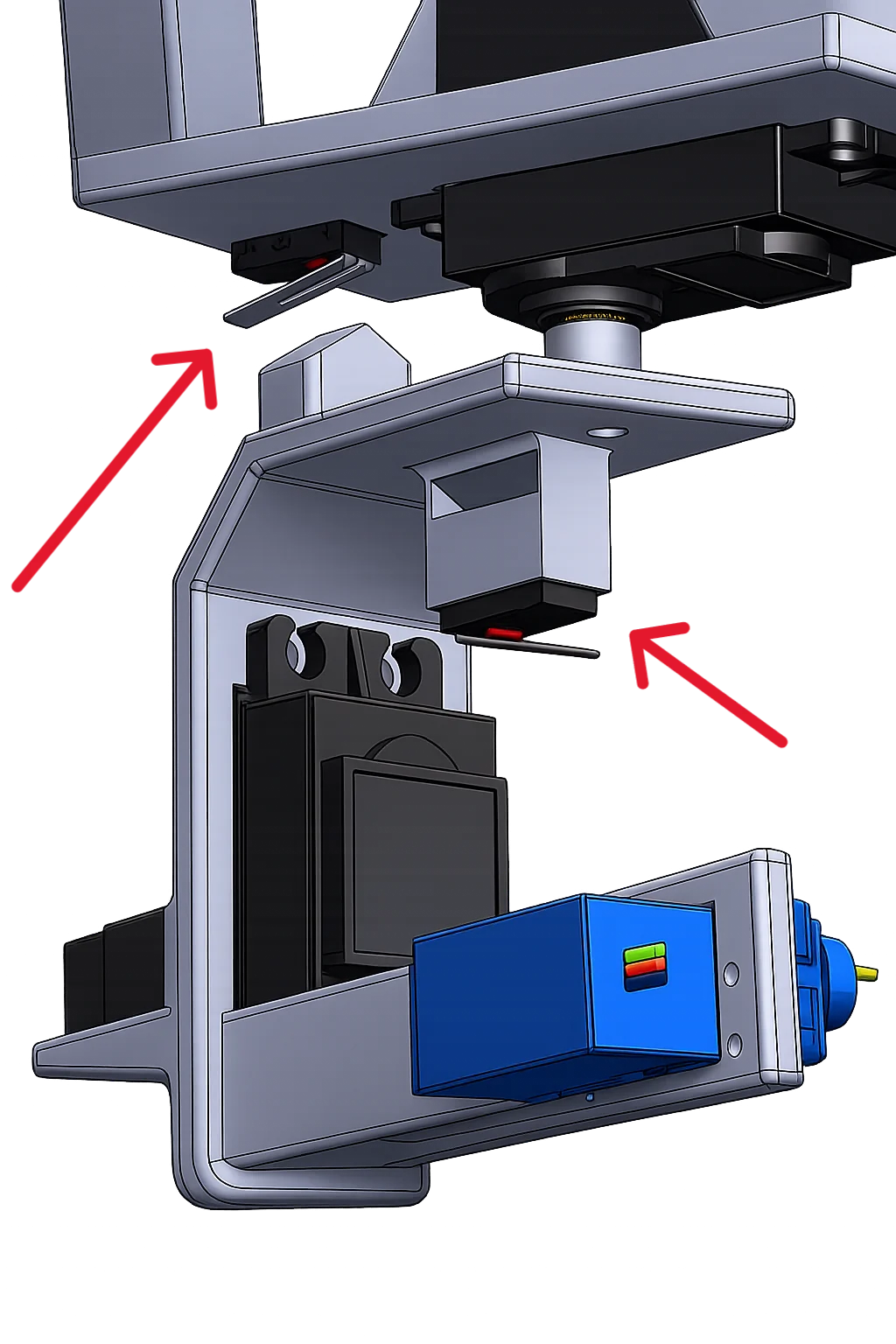
The gimbal combined a detachable payload interface with a central wire path and integrated limit switches. Each detail addressed a practical part of the same problem: allowing useful movement while protecting the connections that make it possible.
The detachable mechanism established a clear module boundary. Protected routing and limit inputs then helped control what happened inside that moving assembly.
- Detachable gimbal for future payload configurations
- Central wire routing to reduce cable strain
- Limit switches to define the motion envelope
05 / Validation and result
Bring the architecture into a working demonstration.
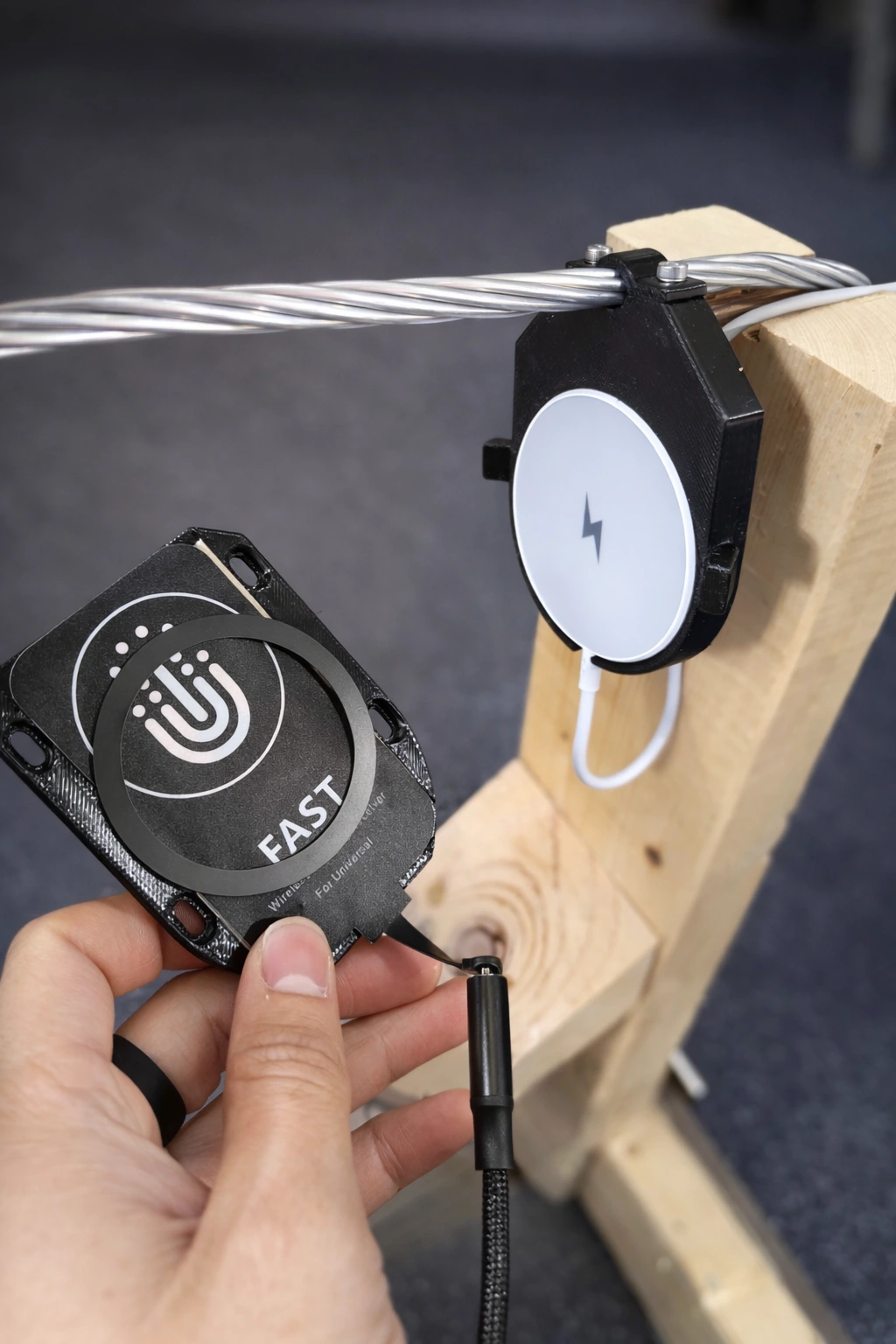
Charging development packaged an induction coil and magnetic alignment features into printed housings. Prototype work then demonstrated the core interactions: detaching the payload, aligning the charging connection, and controlling the gimbal.
Sentinel remained a concept and prototype program. Its outcome was a tangible demonstration of integrated mechanical design and controls, with a modular architecture that could support further development.
- Magnet-assisted alignment for the induction charging concept
- Printed housings to evaluate the charging package
- Prototype demonstrations of motion and payload handling
KEEP EXPLORING
Affinity Airlift Stand